
Customer loyalty is no longer a given. During the COVID-19 pandemic, for example, 77 percent of US consumers changed stores, brands, or the way they shop. Much of that change was driven by necessity. People went online when they couldn’t access their regular stores, and two-thirds said that lack of availability was the primary reason for switching brands. The big winners of the crisis were companies, often the largest players, that could keep products flowing to their customers in a difficult operating environment.
In the postpandemic economy, established brands will face new challenges. As consumer-generated content replaces traditional brand marketing campaigns, companies have less control over the peaks or troughs of demand. Where a business might have once spent months preparing its supply chains for a carefully targeted promotional campaign, now a single viral video can bring attention from millions of consumers overnight. One consumer goods manufacturer experienced a surge in demand in 2020 after a video of a customer enjoying its product on a skateboard ride received millions of views and spawned dozens of imitators.
New players are disrupting retail channels too, widening available choices and creating space for smaller, independent manufacturers. While consumers opted for the security of big brands during the COVID-19 pandemic, a preference for smaller producers is rising, especially among younger cohorts. And the growth of comanufacturing businesses and third-party logistics (3PLs) organizations means new entrants can compete in consumer markets with fewer expensive manufacturing and supply chain assets.
For incumbents, the lesson is clear: move at the same speed as consumers. That means creating innovative products and brands that meet the changing needs of different consumer groups as those needs emerge. And it means greater skill in managing complex portfolios of brands with different market characteristics and delivering their products through multiple channels. These same pressures increasingly hold true for B2B businesses as well, as increased consumer product complexity and demand volatility trickle down the supply chain.
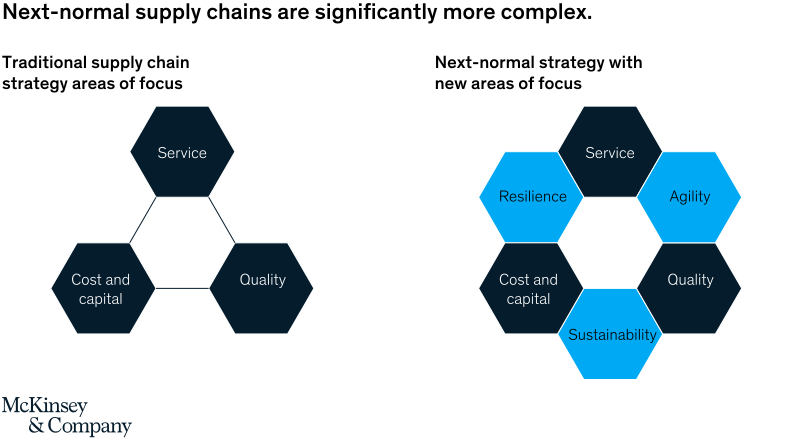
This fast-moving, fragmented, consumer-centric world will require a different sort of supply chain. Traditional supply chains sought to achieve stability and minimize costs. Future supply chains will need to be much more dynamic—and be able to predict, prepare, and respond to rapidly evolving demand and a continually changing product and channel mix. In short, supply chains will need to become agile.
The good news for CSCOs is that agility and resilience are highly complementary: an agile supply chain is inherently more resilient. To be truly effective, however, this agility would need to extend into R&D, procurement, planning, manufacturing, and logistics.

 Transportation & Logistics Software