
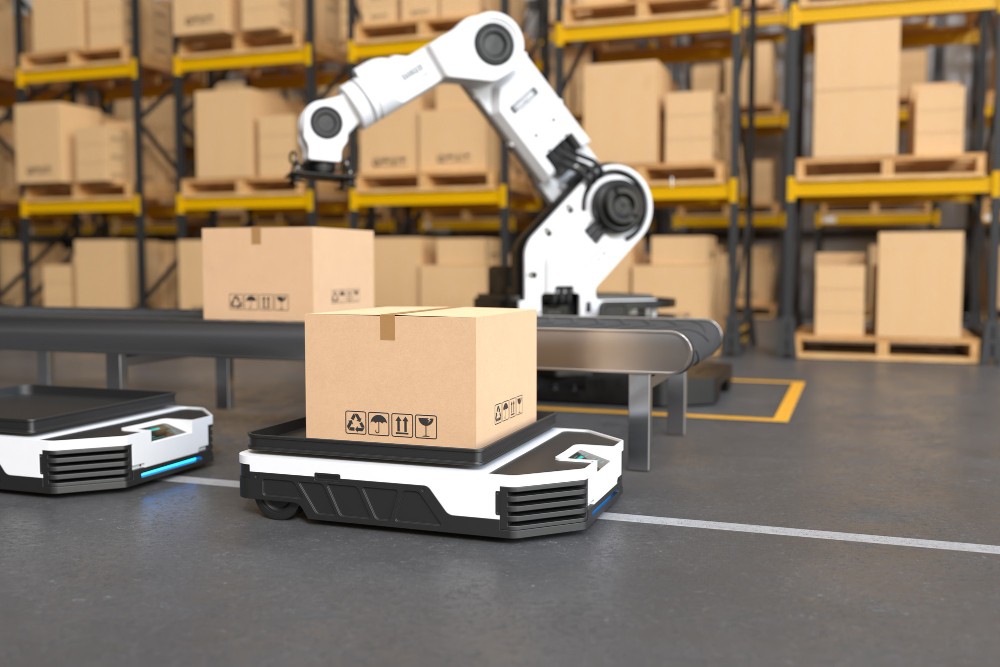
The shift to autonomous supply chains is no longer just a play on efficiency; it has become a strategic imperative. Leading organizations are recognizing that autonomous supply chains promise value on the following four fronts:
Building operational resilience. Autonomous supply chains allow companies to respond faster and more effectively to constant market disruptions. Executives anticipate a 27% reduction in order lead times, coupled with a 25% improvement in labor productivity. Most significantly, disruption recovery times are expected to decrease by nearly 60%, a critical advantage in an era defined by volatility and unpredictability.
Financial gains. As autonomous capabilities scale, leaders surveyed expect to see a 5% increase in earnings before interest and taxes (EBIT) and a 7% improvement in return on capital employed (ROCE).
Sustainability and circularity. Nearly four in 10 companies (39%) believe autonomous operations will drive significant improvements in circular supply chains. By enabling smarter reuse, better recycling and enhanced resource efficiency, autonomy contributes meaningfully to environmental, social and governance (ESG) commitments.
Improving reliability and speed. Improving customer satisfaction through reliable and timely fulfillment is another strategic benefit. Respondents expect a 5% improvement in on-time delivery performance. In addition, 86% foresee cost reductions, 76% expect greater efficiency, 77% believe agility will increase, and 63% anticipate faster processes throughout the supply chain.
To realize this vision of autonomous supply chains will require deliberate investment. On average, companies estimate they need to allocate 0.9% of their annual revenue to develop the necessary capabilities, a figure increasingly seen not as optional, but as essential to remain competitive in a rapidly evolving global landscape.
But not without obstacles: Presently, autonomy remains an aspiration more than a reality. Only 4% of firms surveyed aim to achieve full autonomy. Key barriers include poor data quality and integration, cybersecurity and data privacy risks and gaps in process maturity. Interestingly, employee resistance is not a major blocker; trust in AI decisions is.
To build that trust, companies must start small, pilot autonomous systems in critical areas, ensure transparency in decision-making, and upskill the workforce to collaborate with AI.
Autonomy isn’t a moonshot; it’s a structured, multi-year transformation that’s already underway. While resilience helped organizations survive disruption, autonomy will help them thrive in a world that demands speed, precision, and adaptability.
What sets the leaders apart on this journey? Three critical actions are emerging as differentiators:
Laying a solid digital foundation. Leading organizations are building a secure, standardized digital core that ensures data quality, integration, and governance across the supply chain. This strong foundation enables real-time visibility and decision-making.
For instance, a global high-tech company built a decision intelligence system to address manual and fragmented inventory management. Previously reliant on inconsistent data, the company modernized its digital infrastructure to automatically diagnose shortages, optimize replenishment, and write back decisions into source systems. As a result, it now orchestrates thousands of decisions that were once manual, boosting labor productivity and responsiveness.
Strategic investment in AI-enabling technologies. Instead of waiting for perfect solutions, these companies start with focused pilots, learn fast, and scale proven technologies that enhance automation, prediction, and optimization.
A consumer goods company, for example, introduced an AI-powered batch health monitoring system in one of its Indian factories. This innovation reduced cost per ton by predicting optimal batch performance based on quality, cycle time and utility use. In logistics, it cut average dispatch distances by 15% and boosted truck utilization by 10%. Procurement has also been transformed using AI-based forecasters and optimizers, as well as global tenders and backward integration in sourcing palm oil, resulting in significant material and cost savings.
Redefining the human-technology partnership. Autonomy doesn’t eliminate people; it redefines their role. Companies are redesigning workflows so that humans move from routine execution to strategic guidance, supported by AI-powered systems.
The path forward is clear: companies that invest early are likely to create a virtuous cycle of innovation and growth. Those that delay risk falling into a vicious cycle of stagnation, held back by legacy systems, talent gaps, and an inability to keep pace with the next generation of supply chain performance.
Source: Supply Chain Brain

 Transportation & Logistics Software