
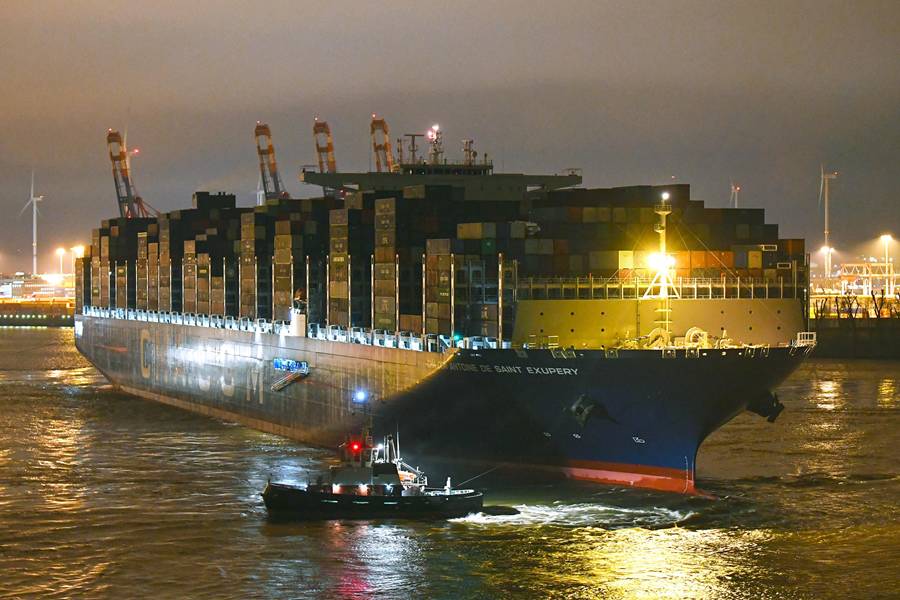
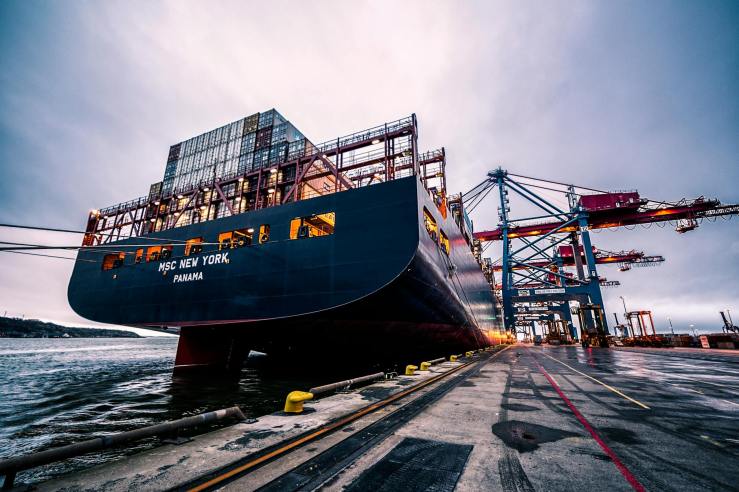
Barcelona, December 4, 2020.- Despite the global economic recession, maritime traffic has started to increase its prices, at least between Asia and Europe. This has been reported by the publication Splas247.com: As analysts have been predicting, spot rates on the Asia-Europe container tradelane shot up today, playing belated catch-up with the booming transpacific.
Tight capacity and limited equipment availability amid a spike in consumer demand saw rates published on the Shanghai Containerized Freight Index (SCFI) leap $447 per teu to $2,091, up 27% in the space of a week. Asia – Mediterranean rates also shot up, climbing by $421 or 23% this week to $2,219 per teu.
Buoyant weekly figures were also published for most tradelanes today – Asia to West Africa rallying by $300 to $4,459 per teu, while trips from Asia to the east coast of Latin America shot up by $402 to hit $4,805 per teu.
Transpacific rates, meanwhile, were flat for the week, but still remain at record highs however.
Recent data published by consultancy Sea-Intelligence shows liners are on track to increase capacity year-on-year on the transpacific by 27.3% in December. On Asia-Europe however, the carriers’ deployment plans indicate a capacity growth of 6.7% year-on-year. Plenty of ships have been rerouted to the far more profitable transpacific in recent months.
“As carriers prioritise containers on the transpacific, some are shifting ex-Asia capacity from Europe to the US,” commented Eytan Buchman from online box booking platform Freightos in a note to clients earlier this week.
“The equipment shortage and port congestion in the US and UK is leading to pain for shippers, with reports of bookings being rejected for lack of empties, containers being offloaded at alternative ports, and shippers delaying bookings until things quiet down,” Buchman added.
The record rates environment in recent months has prompted many governments to intervene. Splashreported this week on the Federal Maritime Commission’s (FMC) expanded probe into liner activity, while India, China and South Korea are also advising liners to rein in their sky high charges.
“I am sure that we will hear more noise now from the European Shippers’ Council, and potentially investigations in the EU similar to what the FMC, China and Korea have been doing,” commented Andy Lane, a container expert at CTI Consultancy in Singapore.
- IRU: Current Analysis of European Transport

- “The era of playing it safe is over”

- Autonomy remains an aspiration more than a reality: Only 4% of firms surveyed aim to achieve full autonomy
- Heatwave reduces load levels on navigable rivers in Europe
- Robotic last-mile deliveries will be a short-term success?

- Current analysis: “57% said that their companies had experienced supply shortages over the last year”
- McKinsey & Company: “Increasing supply chain agility”
- “AI is now the leading cybersecurity concern for security and IT leaders”
- “Integrating real-time monitoring and predictive tools within logistics processes is catching on”

- IRU: 3.4 million drivers will retire by 2029

- France proposes new fee on cheap online orders from Temu and Shein
- Ecommerce: key obstacles in last-mile delivery
- How to Make the Supply Chain More Cost Efficient

- IRU: only 6.5% of truck drivers are under 25 years old, while the number of professionals over 55 continues to increase

- A report from the World Economic Forum and Kearney highlights the global shift towards regionalisation, resilience, digitalisation, and sustainability in supply chains
- Is it true that tenders are undergoing a major transformation?
- Enthusiasm for AI Grows
- Gartner: the biggest Supply Chain tech trends of 2025
- Big Data in Road Planning and Management

- “Tariff volatility is now a permanent factor in supply chain strategy”
- Why Demand Planning Matters More Than Ever
- “Escalating tariffs could send supply chains into further disarray”

- Supply Chain Movement: “The quest to apply AI”

- IRU: The european road freight rate development benchmark (Q4 2024)
- McKinsey: Resilience pulse check

- How to implement agility in your supply chain, today, by 2025?

 Transportation & Logistics Software